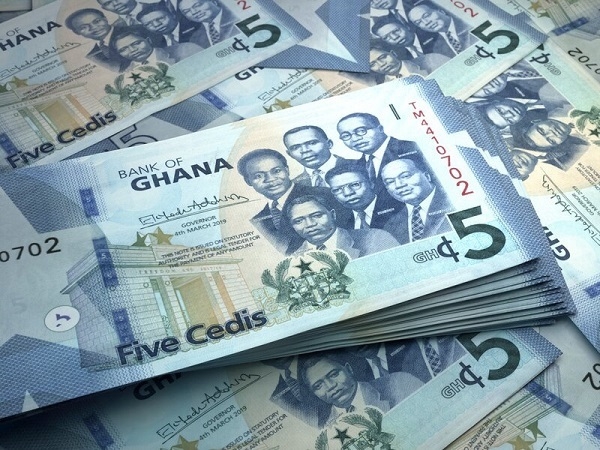
A series of positive developments – including a significant disbursement from the IMF, an agreement reached with external commercial creditors and a weakening in corporate demand – have all contributed to easing pressure on the cedi (GH¢).
The GH¢ was stable against the US$ last week, supported by improved market sentiment as demand for currencies fell. This stability follows the IMF’s board’s approval and subsequent release of funds following the second review of its 36-month Extended Credit Facility (ECF).
Additionally, market intervention by the Bank of Ghana (BoG) – selling bonds worth about US$19 million – played a key role in supporting the cedi.
This stabilization comes after weeks of sustained pressure on the cedi, which culminated in a significant 22.45 percent decline in the retail value of the cedi against the US dollar in the first half of the year.
Continued corporate demand for foreign currencies has fueled this downtrend. However, last week saw a turning point as market liquidity improved and demand slowed.
According to Databank Research, “GH¢ has been struggling in recent weeks, struggling with relentless corporate demand and the resulting depreciation.”
They also highlighted the Bank of Australia’s market intervention, which involved selling about $19 million following the IMF’s $360 million tranche, which helped stabilise the cedi.
The IMF’s $360 million injection into the economy provided a much-needed boost to the country’s foreign reserves. The inflow was part of a larger financial package aimed at supporting economic recovery and structural reforms under the Extended Credit Facility.
IMF support and financial assistance have boosted investor confidence and eased some of the immediate pressure on the cedi, contributing to its recent stabilisation.
In addition to IMF support, an agreement with external commercial creditors played a key role in easing pressure on the cedi. By reaching an agreement with creditors, Ghana was able to manage its debt more effectively, thereby reducing the burden on its foreign reserves. This agreement was crucial in creating a more stable economic environment and improving market sentiment towards the cedi.
Despite recent stabilization against the US dollar, the cedi posted minor declines against the euro (EUR) and the British pound (GBP) – losing 0.30 percent and 0.25 percent on a weekly basis, respectively.
The successful UK election, which eased market uncertainty surrounding the British pound, contributed to its relative strength against the cedi.
These fluctuations highlight the linkages between global currency markets and the impact of external political events on the GH¢.
Looking ahead, the local unit’s prospects seem cautiously optimistic. Analysts do expect a degree of stability, however.
“We expect the cedi to remain stable this week as market liquidity improves and demand eases,” Databank added in a note.
With continued support from international financial institutions and strategic interventions by the Bank of Greece, the cedi is expected to remain stable in the near future.
Market analysts believe that the global economic situation, commodity price fluctuations and the pace of economic recovery will influence the future trajectory of the cedi.
Furthermore, the monetary policy decisions of the Bank of Greece and continued support from international financial institutions will be crucial to maintaining stability.
To navigate the complexities on the global and domestic economic stage, continued vigilance and proactive action will be necessary.
#IMF #inflows #market #growth #ease #pressure #cedi